If you've decided your business needs a website, you've probably come across two very different ways of getting one.
On one side, there's WordPress, which has been around for years and powers a huge amount of the web.
On the other, there are newer AI website builders that promise to create a complete website for you in minutes.
So which one should you use?
The honest answer is that neither is automatically better.
For a small business, the more useful question is:
What do you actually need your website to do, and how much time do you want to spend looking after it?
That matters much more than whether the website was built with WordPress or AI.
The real question isn't which technology is better
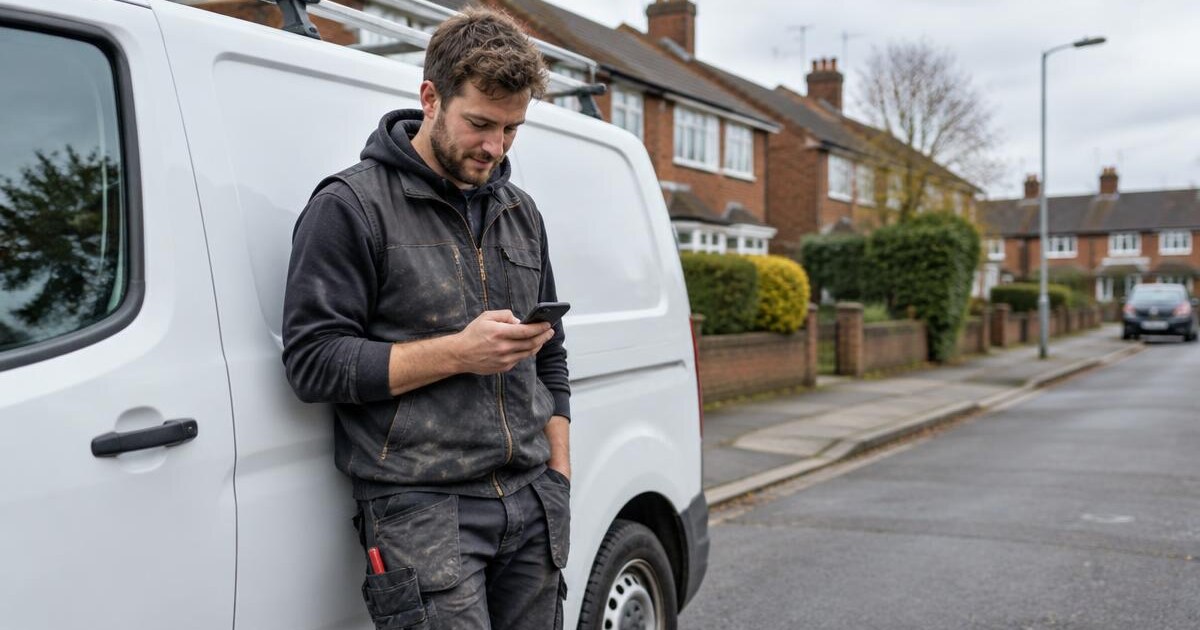
Imagine you're a local plumber, barber, electrician, cleaner, tutor or mobile mechanic.
You probably don't need your website to do anything particularly unusual.
- You need people to find you.
- You need them to understand what you offer and where you work.
- You want to show that you're legitimate.
- You want people to be able to call, message or request a quote.
- Maybe you want to collect reviews, publish some useful information and keep your opening hours up to date.
That's it.
You don't need to choose a platform because it is technically impressive. You need to choose the one that makes it easiest to get the job done.
How quickly can you get online?
This is probably the biggest difference you'll notice.
With an AI website builder, you can start by describing your business in plain English.
I'm a mobile mechanic based in Luton. I cover Luton, Dunstable and nearby areas. I specialise in servicing, diagnostics and brake repairs.
The platform can use that information to create the structure, write initial content and suggest imagery.
You then edit what it has created.
You're starting with something rather than staring at a blank screen.
With WordPress, there's usually more to set up before you even get to the writing.
You'll need hosting, a domain, a theme and potentially a page builder and various plugins. None of those things are particularly difficult for someone who knows what they're doing, but they are extra decisions.
For someone who has never built a website before, the difference can be significant.
An AI builder can get you to a first draft in minutes.
WordPress can absolutely produce a website quickly too, but a beginner may spend much longer figuring out how everything fits together.
What will it actually cost?
This is another area where the comparison can be misleading.
WordPress itself is free.
That doesn't mean running a WordPress website costs nothing.
You'll generally need hosting and a domain, and you may decide to pay for a premium theme, page builder or other tools. If something goes wrong and you can't fix it yourself, there may also be a developer's bill.
None of that makes WordPress expensive by definition. It just means you need to think about the total cost rather than the software's £0 price tag.
AI website builders usually take a different approach.
Hosting, the builder and some maintenance are bundled into the platform, which makes things simpler. The trade-off is that you're working within that platform rather than having complete control over every part of the website.
For a small business, simplicity can be worth a lot.
How much control do you actually need?
This is where WordPress has a very strong argument.
It is extremely flexible.
If you eventually need a membership system, a complicated booking process, a large online shop, multiple languages, a bespoke integration or something very specific, WordPress gives you a huge ecosystem of plugins, themes and development options.
You can build almost anything with the right combination of tools and expertise.
AI website builders tend to be better at the common things.
- Pages.
- Services.
- Contact forms.
- Reviews.
- Images.
- Articles.
- Basic bookings.
- Local business information.
For most small local businesses, those common things are exactly what they need.
So ask yourself a simple question:
Do I need something unusual, or do I just need a really good version of the basics?
If it's the second one, you probably don't need to start with the most flexible platform available.
What about Google and SEO?
This is one of the biggest misconceptions around website builders.
Some people assume that because WordPress is more established, Google automatically prefers WordPress websites.
It doesn't.
Google doesn't care whether you built your website with WordPress, an AI builder or something else.
It cares about the website itself.
- Is the content useful?
- Is it clear what the business does?
- Can search engines understand the pages?
- Does the website work properly on mobile?
- Does it load reasonably quickly?
- Are the links working?
- Can the important pages be discovered?
- Is the information accurate?
A well-built AI website can do these things just as a well-built WordPress website can.
The difference is often how much of the groundwork you have to configure yourself.
With WordPress, there are many ways to improve SEO, but there are also many ways to get it wrong.
With a well-designed website platform, much of that foundation can simply be built in.
Neither approach guarantees that you'll rank at the top of Google.
No platform can promise that.
Who is going to maintain it?
This is the question that gets overlooked.
Ask yourself what happens six months after the website goes live.
- Who is updating it?
- Who changes the opening hours?
- Who adds a new service?
- Who updates the photos?
- Who checks that everything still works?
- Who deals with updates and security?
With WordPress, there can be more maintenance involved. Core software, themes and plugins need to be kept up to date, and backups and security need attention too.
If you know what you're doing, this isn't necessarily a problem.
If you don't, it can become one.
A hosted AI website builder takes more of that responsibility away from you.
You have less control over the underlying technology, but you also have fewer things to worry about.
For a business owner who would rather spend their evening serving customers than troubleshooting a plugin, that's a pretty meaningful trade-off.
When does WordPress make more sense?
WordPress is worth serious consideration if your website is going to be more than a straightforward business site.
For example, you might need:
- A complex booking or membership system.
- A large online shop.
- Bespoke integrations.
- Multiple languages.
- Custom functionality.
- A large content operation.
- Full control over the underlying code and hosting.
It can also make sense if you already have someone who understands WordPress and will look after the site for you.
In those situations, the flexibility becomes much more valuable.
When is an AI website builder the better choice?
An AI builder is a good fit if your main goal is simply to get a professional website online without turning website building into another job.
It makes particular sense if:
- You're starting from scratch.
- You don't have technical experience.
- You want to be online quickly.
- You are going to manage the site yourself.
- You mainly need pages, services, contact information, reviews and useful content.
- You don't want to spend your time maintaining plugins and updates.
For a local business with straightforward needs, that's a pretty good description of the situation.
The sensible middle ground
There is no rule saying you have to choose the most powerful platform on day one.
If you're starting a small business, get the basics working first.
- Build a site.
- Make sure people can find it.
- Make sure they understand what you offer.
- Give them a reason to trust you.
- Make it easy to contact you.
Then see what happens.
If your business grows and you eventually need something your current platform can't provide, that's a good problem to have.
You can move to something more sophisticated when you have a reason to.
The mistake is spending months building the perfect technical setup for a business that hasn't even started getting enquiries yet.
Your website is there to help your business, not become another business for you to run.
If an AI website builder gives you everything you need, use it.
If your business genuinely needs the flexibility of WordPress, use WordPress.
Just make the decision based on what your business needs today, not on which technology sounds more impressive.