If you're a plumber, electrician, roofer, builder, decorator or another local tradesperson, chances are you've used a lead platform at some point.
Checkatrade, MyBuilder and Rated People are familiar names for homeowners looking for someone to do a job. These platforms can be a useful source of work, particularly when you're building up your customer base or have space in the diary.
But there is a difference between using a lead platform and depending on one.
If most of your new work comes through someone else's platform, a change in fees, competition or demand can have a noticeable effect on your business. You also have limited control over what a potential customer sees before deciding whether to contact you.
The answer isn't to stop using these platforms if they work for you. It's to give customers other ways to find you too.
A good local presence should make it easy for someone to find your business, check your work, decide that you're suitable for the job and get in touch directly.
Lead platforms can make sense.
They can put you in front of people who are actively looking for a tradesperson, without you having to find those customers yourself. If the jobs are suitable and the numbers work, there is nothing wrong with continuing to use them.
The important thing is to look beyond the number of enquiries.
For each platform, keep track of:
- How many enquiries were actually suitable for your trade and area?
- How many did you quote for?
- How many quotes became paid jobs?
- How much did you spend to win those jobs?
- What was the average value of the work?
- Did those customers come back or recommend you?
A platform that sends you 20 enquiries isn't necessarily better than one that sends five if the five produce more profitable work.
It is also worth knowing where your other jobs come from. Referrals, Google searches, repeat customers and social media may not produce the same volume of enquiries, but they can become important sources of work over time.
The goal is not to find one platform that keeps your phone ringing forever. It's to have several ways for customers to find you.
Here's something worth remembering when you're on Checkatrade, MyBuilder or another lead site:
The customer may still search for you before they hire you.
They might see your profile, then Google your business name. They may look at your reviews, check your photographs, visit your website or search for the areas you cover.
That's your opportunity.
If they find very little, you are asking them to make a decision based almost entirely on the platform where they first found you.
If they find a clear Google profile, a simple website, genuine photographs and good reviews, they have more information to work with.
You don't need a huge online presence. You need a credible one.
Make your Google Business Profile work for you
For a local tradesperson, Google is one of the simplest places to start.
A customer might search for:
“plumber near me”
or:
“electrician in Luton”
or even search your business name after seeing you somewhere else.
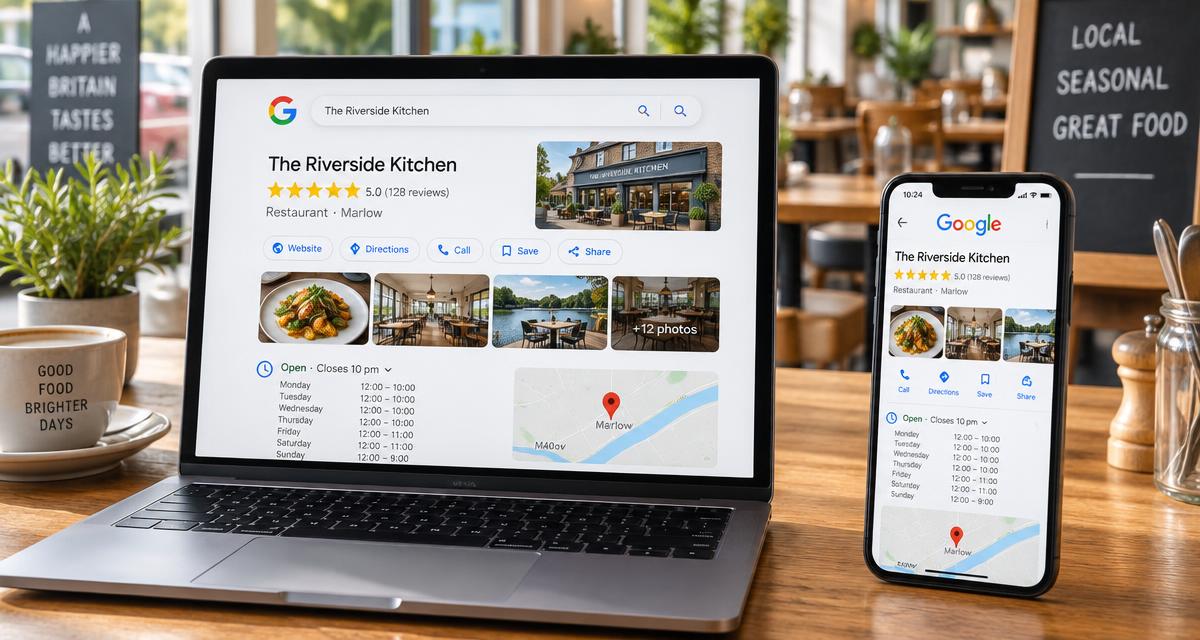
Your Google Business Profile can give them useful information before they ever visit your website.
Make sure your profile has:
- Your real business name
- The right primary category
- Your phone number
- Current opening hours
- The areas you genuinely serve
- A clear description of your services
- Recent photographs of your actual work
- Customer reviews
- A link to your website
Don't treat the profile as something you set up once and forget about.
Add photographs when you complete good jobs. Keep your details up to date. Respond to reviews. If your service area or opening hours change, change them on Google too.
The aim isn't to make your profile look impressive. It's to help someone quickly work out whether you are the right person for their job.
Ask happy customers for reviews
If a customer is pleased with your work, don't assume they'll automatically leave a review.
Most won't.
That doesn't necessarily mean they weren't happy. They simply get on with their day.
Make it easy for them.
Once the job is finished, send a short message with a direct link to where you'd like them to leave an honest review.
For example:
Thanks for having us round today. If you're happy with the work, we'd really appreciate an honest Google review. It helps people in the area find us when they need the same kind of work. Thanks again.
That's enough.
You don't need to write a long message explaining how important reviews are to your business. And don't offer a reward in exchange for a positive review. Ask for honest feedback.
Over time, those reviews become useful proof for the next customer who is deciding whether to call you.
Give people somewhere to go after they find you
Your website doesn't need to win design awards.
For most tradespeople, its job is much simpler: answer the questions a potential customer has before they pick up the phone.
A customer should be able to work out:
- What work do you do?
- Where do you work?
- Do you take on the type of job they need?
- Can they see examples of your work?
- What do previous customers say?
- How can they contact you?
- What should they send you if they want a quote?
For some trades, a phone number at the top of the page is more useful than a complicated enquiry form. For others, asking customers to send photographs of the job can save time.
Think about what you would want to know if you were the customer.
If someone needs a roofer because they've discovered a leak, they probably don't want to read your company's history before finding your phone number.
If someone is planning a £10,000 renovation, they may want to see previous projects, reviews and the areas you cover before getting in touch.
Build the site around the customer's decision, not around what you want to say about the business.
On OneLuton, a trade website can include your services, work gallery, customer reviews, contact form and tap-to-call button, giving a potential customer the basics in one place.
Our website option for tradespeople starts with those sections in place, so you can replace the draft content with your real services, areas and photographs.
Show your actual work
A customer is much more interested in seeing what you've actually done than hearing that you're “the best tradesperson in the area”.
Take photographs when you finish a good job.
They don't need to be professionally photographed. They just need to be clear, relevant and taken with the customer's permission.
You could show:
Before: an old bathroom that needed updating.
After: the finished bathroom.
Or:
The job: damaged roof tiles causing a leak.
The work: tiles replaced and the affected area repaired.
A few lines explaining the job can make the photograph more useful.
Be careful with customer privacy. Don't publish house numbers, addresses, faces or other personal details without permission.
And if your trade requires specific qualifications, registrations or memberships, be clear about what you actually hold. Link to the relevant official register where appropriate.
Trust is easier to build when customers can check what you're saying.
Be specific about where you work
One of the easiest ways to make a local business sound less local is to claim that you cover everywhere.
If you're based in Luton, for example, you might regularly work in Dunstable, Houghton Regis, Harpenden and surrounding areas.
Say so.
You can also explain where you are willing to travel for larger jobs.
A tradesperson might cover a 10-mile radius for smaller repairs but travel farther for a full renovation. That's perfectly reasonable. Customers just need to know.
Specific locations also make your website more useful to people searching for a tradesperson in their area.
Just don't create pages for dozens of towns where you have never worked simply because you think it will bring in Google traffic.
Be accurate about where you actually work.
And keep those details consistent across your website and Google profile.
Turn completed jobs into future work
One finished job can sometimes lead to another.
A customer may need more work themselves. Their neighbour may need a similar job. A family member may ask who did the work.
Make it easy for them to pass your details on.
At the end of a job, your customer should have your:
- Business name
- Phone number
- Website
- Service information
A simple digital business card or a website they can easily share can be useful here.
You can also ask satisfied customers whether they know anyone else who might need the same service.
It doesn't need to feel like a sales pitch.
If you've just repaired someone's roof and they tell you their neighbour has been looking for a roofer, a simple “feel free to pass them my number” is enough.
Don't underestimate repeat customers
Not every trade is built around repeat work, but many have more repeat potential than they realise.
A gardener might return every few weeks.
A cleaner might have a regular schedule.
A plumber might be called back for another job months later.
A builder or decorator may be recommended to the same family for another project.
Keep your customer details organised and, where appropriate, let previous customers know when you're available for new work.
The customer who already knows you doesn't need to be convinced from scratch.
Spend 30 minutes a week on your local presence
You don't need to become a social media expert or spend every evening working on your website.
Set aside half an hour each week.
You could:
- Reply to new reviews.
- Add one photograph from a completed job.
- Check that your phone number and opening hours are correct.
- Follow up with a customer who asked for a quote.
- Ask one happy customer for an honest review.
- Record where your serious enquiries came from.
That's it.
After a few months, you'll have more useful information about what actually brings work into the business.
You may discover that Checkatrade is worth keeping. You may find that referrals produce your best customers. You may notice that people regularly find you through Google after hearing your name from someone else.
The point is to know, rather than guess.
Checkatrade, MyBuilder, Rated People and similar services can be useful parts of a tradesperson's marketing.
The problem is not using them.
The problem is having nowhere else for a customer to go.
If a customer finds you through a lead platform, they should be able to Google your name and find a business that looks real, active and trustworthy.
If someone is referred to you by a neighbour, they should be able to check your work before calling.
If someone searches for a plumber, electrician or roofer in their area, you want your business to have a chance of being found directly.
That means building a few simple things alongside your paid lead channels:
- A Google Business Profile.
- A clear mobile-friendly website.
- Recent photographs of real work.
- Honest customer reviews.
- A clear service area.
- An easy way to contact you.
You don't need to build all of this overnight.
Start with the basics and keep them up to date.
The goal isn't to never use a lead platform again. It's to make sure that when a customer needs your services, you have more than one way to reach them.
That's a much stronger position for a local trade business.