

Guides10 min read
Are you charging enough? A pricing guide for small business owners
Learn how to price your services, calculate your hourly rate, cover hidden business costs and build a sustainable small business in the UK.
Read article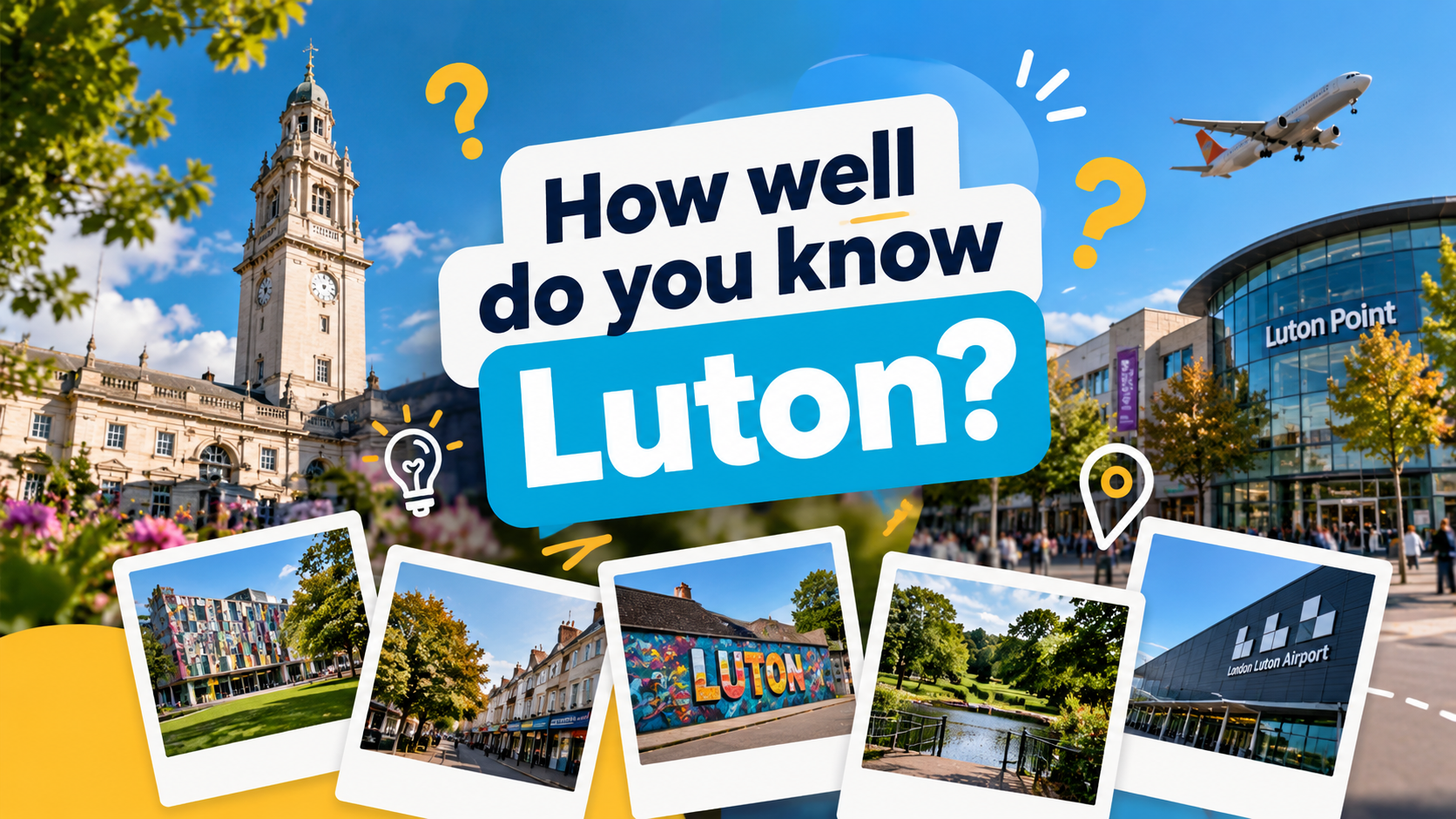
From its neighbourhoods and communities to its economy, schools and everyday life, there's more to Luton than you might think.
You might have lived in Luton your entire life. You know the roads, the shortcuts, where to shop, where to get a decent meal and which parts of town to avoid driving through at certain times. You probably have your favourite places, your usual routines and a few opinions about how much the town has changed over the years.
But how well do you really know Luton?
Beyond the places you visit regularly, there's a lot happening across the town that you might never have had a reason to explore. Different neighbourhoods have their own character, communities and businesses. The local economy stretches well beyond the airport, and the decisions people make about housing, schools, work and business are often shaped by things that aren't immediately obvious.
Whether you've lived here for decades, recently moved to the area or are thinking about making Luton your home, there's always something new to discover.
Let's take a closer look at the town, the people who make it what it is and some of the things worth knowing about living and working here.
It's easy to think of Luton as a relatively small town, particularly when London is just down the road. But the numbers tell a different story.
According to the 2021 Census, Luton had approximately 225,300 residents, representing population growth of 10.9% between 2011 and 2021. That's considerably higher than the 6.6% increase recorded across England during the same period.
Luton also has a relatively young population. Its median age at the time of the Census was 34, compared with 40 across England.
These might seem like ordinary statistics, but they tell us something about the town and how it's changing. A growing, relatively young population brings different needs and opportunities, from housing and education to employment, childcare, transport and local services.
Think about what that means for someone considering opening a nursery, starting a home maintenance business or setting up a new community programme. Population figures won't tell them whether their idea will succeed, but they offer a useful starting point for understanding the people they hope to serve.
Of course, Luton's population isn't spread evenly across the town, and the experiences of people living in different neighbourhoods can vary considerably. That's where looking beyond the borough-wide figures becomes important.
Source: Office for National Statistics, Census 2021.
Ask a few Luton residents to describe the town and you'll probably get very different answers, depending on where they live.
Someone who spends most of their time around George Street and the town centre might think of Luton in terms of shopping, transport, offices and the bustle of everyday activity. Someone living in Stopsley might have a very different experience, shaped by residential streets, local amenities and their journey into town.
Bury Park has its own distinctive energy, with independent businesses, food shops, restaurants and busy commercial streets. High Town offers another side of Luton, with its mix of independent enterprises, residential areas and local character. Then there are places such as Leagrave, Sundon Park, Lewsey and Farley Hill, each with its own surroundings and everyday rhythms.
None of these areas tells the whole story of Luton.
And these differences matter more than we sometimes realise. If you're looking for somewhere to live, you might be interested in access to schools, public transport, green spaces or nearby shops. If you're planning to open a business, you may be thinking about customer access, parking, delivery routes, neighbouring businesses and the cost of premises.
Even within the same neighbourhood, two streets can offer very different experiences.
Luton is divided into 20 electoral wards, although the boundaries of those wards don't always match the neighbourhood names or postcode areas people use in everyday conversation. It's a useful reminder that understanding an area takes more than looking at its postcode.
So, if someone asked you to compare living in Stopsley with living in Leagrave, what would you tell them? And how much of your answer would come from personal experience rather than information you've actually researched?
Both have their place, but together they can give a much fuller picture.
One of the things that makes Luton distinctive is the variety of people, cultures and communities that call it home.
You see it in the food, the businesses, the languages spoken, the community celebrations and the places where people come together. From family-run shops and restaurants to community organisations and cultural events, Luton's diversity is part of everyday life.
The 2021 Census helps put some numbers behind that experience. Around 37% of Luton residents identified within the Asian, Asian British or Asian Welsh ethnic group category, while approximately 10% identified within the Black, Black British, Black Welsh, Caribbean or African category. Other residents identified within White, Mixed or Multiple, and other ethnic group categories.
But statistics can only tell part of the story.
They don't capture the experiences of individual families, the relationships between communities or the many different ways people contribute to the town.
For local businesses, community groups and public services, understanding the population is important. It can help people think more carefully about accessibility, communication and the needs of the communities they serve.
That doesn't mean assuming everyone from a particular background wants the same things. Quite the opposite. It means recognising that a diverse town requires a more thoughtful understanding of the people who live in it.
And sometimes, the most useful research begins with something as simple as listening to people in your own community.
Source: Office for National Statistics, Census 2021.
Tell someone from outside Bedfordshire that you're from Luton and there's a good chance the airport will come up in conversation.
London Luton Airport is certainly one of the town's most recognisable assets. It supports employment, connects the area to destinations across Europe and beyond, and plays an important role in the wider regional economy.
But it would be a mistake to think Luton's economy begins and ends at the airport.
The town has a long industrial history, including its association with hat-making and motor manufacturing. Today, its economy includes logistics, manufacturing, retail, hospitality, healthcare, education, professional services and a wide range of independent businesses.
Places such as Capability Green, Butterfield Business Park and Sundon Park are reminders that significant commercial activity happens outside the town centre. The University of Bedfordshire also contributes to the local education and employment landscape.
Then there are the smaller businesses that form part of everyday life: the barbers, caterers, electricians, cleaners, independent retailers, mechanics, designers and people running businesses from their homes.
They might not always feature in economic reports, but they are an important part of how the town works.
For anyone thinking about starting a business in Luton, this creates an interesting question: where are the opportunities?
Perhaps you've noticed that a particular service seems difficult to find in your area. Maybe you've seen a growing number of businesses serving a particular customer group, or wondered whether a service that works in one part of town could also work somewhere else.
Those observations are worth exploring, but they aren't proof of demand on their own.
A good business idea still needs research. Who would use the service? What alternatives already exist? What would customers be willing to pay? And does the local market offer enough opportunity to make the idea sustainable?
Understanding Luton's economy is a useful place to begin answering those questions.
One of the interesting things about living in Luton is how closely connected it is to the surrounding towns and cities.
You might live in Luton but work in Milton Keynes. Your children might attend school in another town. You might regularly visit Dunstable, Harpenden or Hitchin, or travel into London several times a week.
For many people, these journeys are simply part of everyday life.
Luton's position near the M1, together with its rail connections, makes it an important part of the wider Bedfordshire and Hertfordshire area. Luton and Luton Airport Parkway stations provide rail connections towards London and the Midlands, while the Luton DART links Luton Airport Parkway with the airport terminal in approximately four minutes.
These connections influence more than commuting.
They affect where people choose to live, where businesses find customers, how tradespeople organise their working days and which local services people use.
Consider a self-employed plumber based in Leagrave who regularly takes jobs in Dunstable and Harpenden. The distance between those places might not look particularly significant on a map, but travel time, parking, fuel costs and the number of jobs that can realistically be completed in a day all affect the business.
For a family considering a move, the questions are different. How convenient is the school run? What does the commute look like during peak hours? Are the local amenities within walking distance, or will most journeys require a car?
There's no single answer that works for everyone.
That's why understanding Luton also means understanding its relationship with the places around it.
If you've ever searched for a property in Luton, you'll know how quickly the conversation can turn to house prices, rent and which neighbourhoods are considered more affordable.
Those are important considerations, especially when household budgets are under pressure. But they don't tell you everything about what living in an area will actually be like.
Two properties with similar prices can offer very different experiences.
One might be close to a railway station, making commuting easier. Another might be better located for schools, family support or everyday shopping. A quieter residential street might appeal to one household, while another would prefer to be within walking distance of the town centre.
School admissions are a particularly good example of why local research matters.
Luton Borough Council provides information to help families identify school catchment areas, but living within a catchment area doesn't automatically guarantee a place at a particular school. Admissions criteria, available places and individual circumstances can all affect the outcome.
That's the kind of detail that's easy to overlook when you're focused on finding the right property.
The same applies to planning requirements, parking arrangements, transport costs and local services. They might not seem like the most exciting things to investigate, but they can make a real difference to everyday life.
If you're thinking about moving to Luton, or even moving from one part of town to another, it's worth spending time researching the practical details alongside the property itself.
And if you're comparing Luton with Dunstable, Hitchin or Harpenden, remember that different councils may have different responsibilities, services and local arrangements.
A little research before making a decision can save a lot of frustration later.
Here's a situation you might recognise.
You want to find out whether you need planning permission for something you're doing at home. Or perhaps you're thinking about selling food from your kitchen and need to understand the registration requirements.
Maybe you're researching school admissions, looking for business support or trying to find out which organisations can help with a community project.
You open your browser, type in your question and start searching.
Before long, you have several tabs open. One leads to a council page, another to government guidance, and another to a document you're not entirely sure is up to date. Some information is useful, but other pages leave you with more questions.
It's not necessarily that the answers don't exist. Often, they're simply spread across different places.
And when you're trying to make a decision involving several things at once, it gets even more complicated.
Imagine someone who wants to start a small catering business from home. They might need to understand food registration, hygiene requirements, startup costs, local customers and how to promote their service.
Or someone considering a move to Luton who wants to compare neighbourhoods, school arrangements, transport connections and housing costs.
Each question is connected to the next, but finding and understanding the relevant information can take time.
This is where having a better way to explore local knowledge becomes useful.
Not necessarily a system that claims to know everything, but one that helps you ask questions, bring relevant information together, understand where it comes from and work out what to investigate next.
Perhaps you've discovered something new while reading this. Or maybe much of it feels familiar because you've lived here long enough to see the town change.
Either way, there's always more to learn.
You might know your own neighbourhood inside out but have little idea what's happening elsewhere in Luton. You might understand the town's transport connections but never have had a reason to look at its population data. Or perhaps you've spent years living here without needing to investigate the rules, services and support available locally.
That's perfectly normal. Nobody needs to know everything about where they live.
But when an important question comes up, knowing how to find reliable information can make a real difference.
It's also one of the reasons we created LutoniQ, OneLuton's free local intelligence tool. We wrote about why in Introducing LutoniQ: your local intelligence partner.
LutoniQ is designed to help you explore questions about Luton and surrounding towns, whether you're researching a business idea, comparing places to live, looking into schools, understanding local requirements or finding support.
You can ask questions in your own words, explore the available local information and continue the conversation as new questions come to mind. Where supporting evidence is available, LutoniQ aims to show where it comes from and help you distinguish established information from estimates or things that still need checking.
It's not about replacing your own judgement or the official sources you may need to consult. It's about making the process of finding and understanding local information a little easier.
Because there's a lot to know about Luton, and sometimes all it takes to discover something useful is asking the right question.
Whether you've lived here all your life or you're just getting to know the area, there's always something worth exploring.
It's free to start, and you don't need an account to ask your first questions.
Built in Luton. Grounded in local knowledge. Made for the people who live, work and build here.
Answer a few questions and OneLuton drafts a complete, mobile-ready site for your business, with the search groundwork already handled. Free while we grow.
Build my siteLearn how to price your services, calculate your hourly rate, cover hidden business costs and build a sustainable small business in the UK.
Read article
Meet LutonSites, OneLuton's free AI website builder helping local businesses, freelancers and independent professionals create websites in minutes.
Read article
Meet LutoniQ, OneLuton's free local intelligence tool. Explore business, housing, schools, local rules and support across Luton and surrounding towns.
Read article